
What is Performance Marketing?
Performance marketing is a special type of marketing. It is based on results. Companies pay for specific actions. These actions can be clicks, sales, or leads. It’s very different from traditional marketing.
Why Use Performance Marketing?
Performance marketing is useful. It helps control spending. You pay only for real results. This makes it efficient and cost-effective. It is also measurable. You can track success easily.
Key Performance Marketing Strategies
There are several strategies in performance marketing. Let’s look at them one by one.
1. Pay-per-click (ppc)
PPC is a common strategy. Advertisers pay each time someone clicks on their ad. Google Ads is a popular PPC platform. PPC helps reach a wide audience quickly.
2. Affiliate Marketing
Affiliate marketing involves partnerships. Companies partner with affiliates. Affiliates promote products. They earn a commission for each sale. This strategy helps expand reach.
3. Social Media Advertising
Social media platforms are powerful. Facebook, Instagram, and Twitter are examples. Ads on these platforms reach specific audiences. They use user data to target effectively.
4. Email Marketing
Email marketing is direct. It targets potential customers. Newsletters and promotions are sent via email. It’s cost-effective and builds relationships.
5. Influencer Marketing
Influencers have large followings. They promote products to their audience. This builds trust and credibility. It can lead to increased sales.
How to Choose the Right Strategy?
Choosing the right strategy is important. First, know your goals. Different strategies fit different goals. Also, consider your budget. Some strategies cost more than others. Finally, think about your audience. Where do they spend their time?
Measuring Performance Marketing Success
Measuring success is key. Use key performance indicators (KPIs). Common KPIs include clicks, conversions, and return on investment (ROI). Tracking these helps improve strategies.
Common KPIs in Performance Marketing
| KPI | Description |
|---|---|
| Clicks | Number of times ads are clicked |
| Conversions | Number of desired actions completed |
| ROI | Return on investment from marketing efforts |
Challenges in Performance Marketing
Performance marketing has challenges. Ad blockers are one challenge. They prevent ads from showing. Also, competition is high. Many businesses use these strategies. This can increase costs.
Tips for Success
- Set clear goals for your campaigns.
- Understand your audience well.
- Choose the right platforms for ads.
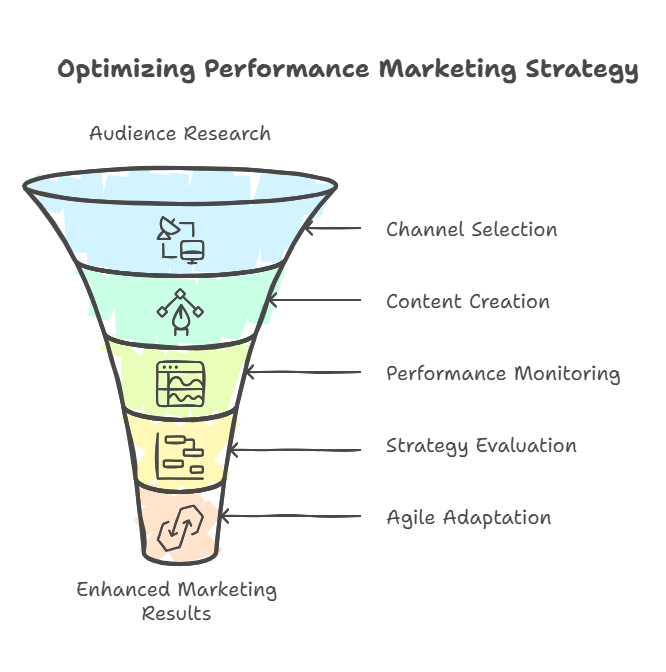
- Monitor and adjust strategies regularly.
- Stay updated with industry trends.
Frequently Asked Questions
What Is Performance Marketing?
Performance marketing is a strategy where advertisers pay based on results. Common metrics include clicks, sales, or leads.
Why Is Performance Marketing Important?
It allows businesses to measure ROI accurately. Thus, ensuring they only spend on effective campaigns.
How Does Performance Marketing Work?
Advertisers set specific goals. They pay for actions like clicks, sales, or leads, not just views.
What Are Common Performance Marketing Channels?
Popular channels include PPC, affiliate marketing, and social media ads. Each has unique benefits.